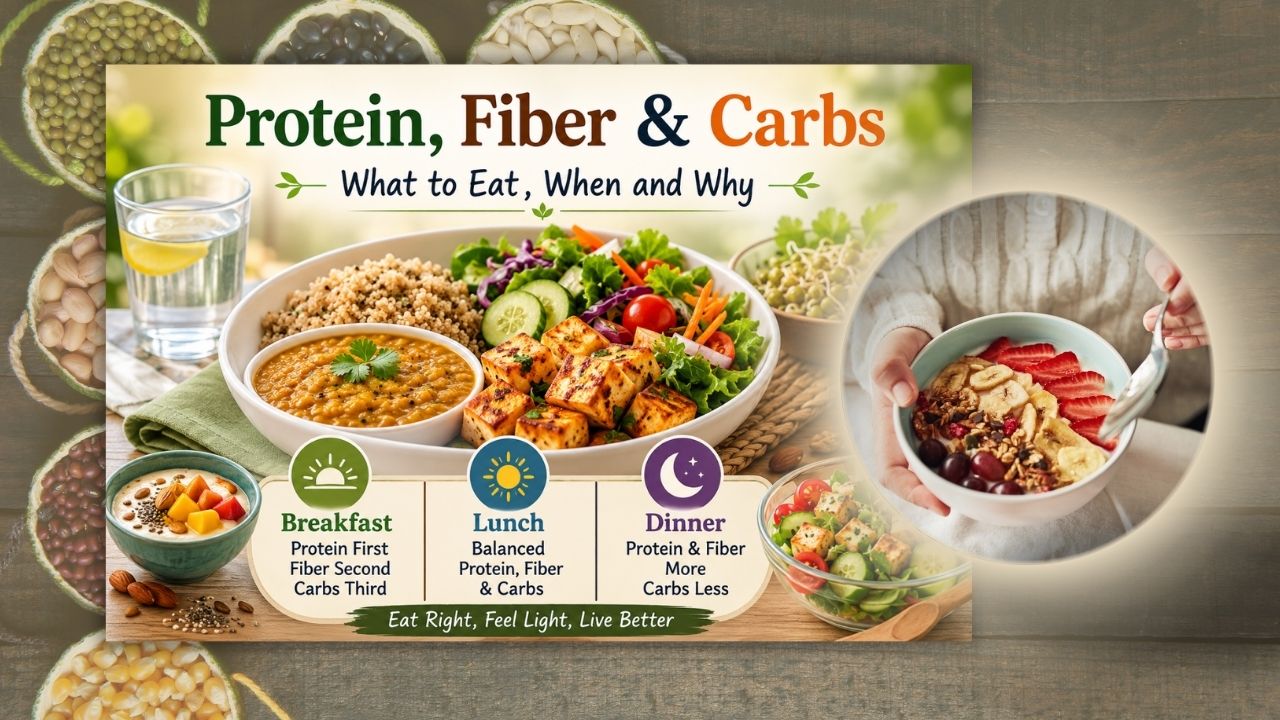

A simple guide to balancing protein, fiber, and healthy carbohydrates throughout the day for better energy, digestion, and overall health.
Protein, Fiber, or Carbohydrates: What Should You Prioritize at Each Meal?
Every few months, a new health trend appears. One trend says to eat more protein. Another tells us to avoid carbohydrates. Yet another claims that fiber is the secret to good health.
The truth is that our bodies need all three. The key is understanding which nutrient deserves the most attention at different times of the day.
For vegetarians, this balance becomes even more important because many plant foods naturally contain a mix of protein, carbohydrates, and fiber.
Instead of asking, "Which nutrient is best?" a better question is:
"What should I focus on at breakfast, lunch, and dinner?"
The Role of Each Nutrient
Protein: The Body's Builder
Protein helps build and repair muscles, tissues, skin, and hair. It also keeps us feeling satisfied for longer, reducing unnecessary cravings.
Good vegetarian sources include:
Carbohydrates: The Body's Fuel
Carbohydrates provide energy for the brain and muscles. Without enough healthy carbohydrates, many people feel tired, sluggish, and mentally drained.
Healthy sources include:
Fiber: The Silent Hero
Fiber supports digestion, nourishes beneficial gut bacteria, and helps slow the absorption of sugar into the bloodstream.
This is one reason nutrition experts often recommend pairing carbohydrates with fiber-rich foods.
Excellent sources include:
Breakfast: Protein First, Fiber Second, Carbohydrates Third
After a night's sleep, the body needs nourishment that provides lasting energy rather than a quick sugar rush.
Many people start the day with tea, biscuits, sugary cereals, or white bread. These foods are high in carbohydrates but low in protein and fiber, which often leads to hunger a few hours later.
A better approach is:
Priority Order
1. Protein
2. Fiber
3. Healthy Carbohydrates
Why?
Protein helps keep you full.
Fiber slows digestion and supports stable blood sugar.
Healthy carbohydrates provide energy without causing large spikes when combined with protein and fiber.
Good Breakfast Examples
Lunch: The Most Balanced Meal of the Day
Most people are most active between morning and evening. This is when the body can make the best use of carbohydrates for energy.
Lunch should be balanced rather than extreme.
Priority Order
Protein + Fiber + Healthy Carbohydrates
All three deserve almost equal attention.
Good Lunch Examples
A simple rule is to fill half your plate with vegetables and salad before adding the rest.
Dinner: Protein and Fiber Take the Lead
As the day winds down, most people become less active.
This does not mean carbohydrates are bad. It simply means the body generally needs less of them compared to earlier in the day.
Priority Order
1. Protein
2. Fiber
3. Healthy Carbohydrates
Good Dinner Examples
Many people find that reducing heavy carbohydrates at dinner helps them feel lighter before bedtime.
Two Meals or Three Meals?
People often ask whether they should eat three meals a day or only two.
The answer depends on lifestyle, hunger levels, and overall health.
Three Meals a Day May Be Better If:
Two Meals with Healthy Snacks May Work If:
The One Habit That Makes the Biggest Difference
Before increasing protein powders, cutting out carbohydrates, or following the latest diet trend, try this simple habit:
Include a source of protein and fiber every time you eat carbohydrates.
Instead of eating fruit alone, pair it with nuts.
Instead of eating roti alone, eat it with dal and vegetables.
Instead of eating oats alone, add seeds and nuts.
This simple combination can improve fullness, digestion, and energy levels throughout the day.
Final Thought
Healthy eating does not have to be complicated.
Remember this simple formula:
Breakfast: Protein First, Fiber Second, Carbohydrates Third.
Lunch: Keep All Three Balanced.
Dinner: Protein and Fiber First, Carbohydrates Last.
When you follow this approach consistently, your body receives steady energy, better digestion, and the nourishment it needs to thrive naturally.